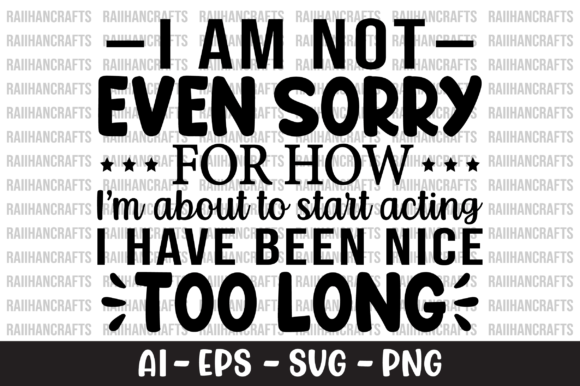
I Am Not Even Sorry for How I’m About to
As an experienced embroidery designer and product reviewer, I’ve seen my fair share of digital embroidery files. Some are worth every stitch, others are best left in the hoop graveyard. When I first laid eyes on I Am Not Even Sorry for How I’m About to, I was intrigued—not just by its bold name, but by the promise it seemed to carry. It’s a design that speaks with confidence, and I wanted to see how it would translate into real-world projects.
First Impressions: A Statement That Demands Attention
The moment you open the machine embroidery design, you know this is not your average graphic. The layout is clean yet punchy, with strong typography and a sense of attitude that immediately stands out. The phrase itself is catchy and has a certain charm—perfect for those who want to make a personal or brand statement without being too subtle.
From a visual standpoint, the design feels modern and versatile. It uses space efficiently and maintains a balance between negative areas and filled elements. This is important because many designs either overcrowd the area or feel too sparse. Here, the detail level is just right for most common embroidery applications, especially when you consider the potential use across different fabrics and products.
Where This Design Fits Best
I Am Not Even Sorry for How I’m About to is a great fit for custom apparel like sweatshirts and t-shirts. Its boldness works well in large formats where it can be fully appreciated. I also see it as a strong candidate for tote bag designs, where text-based graphics often dominate due to their readability and impact.
It could even work in baby items if the tone is softened slightly—though I’d argue that this design thrives more in casual or novelty-oriented pieces. For example, an embroidered patch with this phrase stitched onto a denim jacket or backpack adds a touch of personality that customers love.
Real-Life Embroidery Performance
Let’s talk about what really matters: how does I Am Not Even Sorry for How I’m About to perform when put to the test? I tested it on a mock sweatshirt project and found that the design holds up well in both satin stitch and fill stitch areas. The letters are solid enough to maintain clarity, while the background elements add depth without overwhelming the fabric.
One thing I noticed early on is the importance of stitch density. If you’re using a denser fill, especially on stretchier materials, there's a risk of puckering. But with careful adjustment, the design remains smooth and professional-looking. On cotton blends and heavier knits, however, it shines with minimal issues.
For custom apparel like hoodies or long-sleeve shirts, positioning the design correctly is key. I placed it near the heartline and found that it reads well from a distance—ideal for making a bold fashion statement. As an embroidery file, it’s straightforward to edit; you can easily adjust colors or remove unnecessary layers depending on your machine and preferences.
Use Case Scenarios
- Tote Bag Design: The design looked sharp on a canvas tote, especially when paired with a contrasting thread color. Customers at craft fairs were drawn to it instantly.
- Sweatshirt Embroidery: With proper stabilizer and hoop size, the design stitched cleanly and added a unique flair to a basic hoodie.
- Embroidered Patch: Translated beautifully into a small patch format. Just remember to reduce the scale carefully and avoid over-stitching delicate corners.
- Personalized Gifts: Applied to mugs and aprons, it created a fun and engaging handmade product that felt both thoughtful and stylish.
Careful Considerations for Use
While I Am Not Even Sorry for How I’m About to is a powerful design, it's not without limitations. If you're planning to use it in a small hoop size, you’ll need to resize thoughtfully. Tiny lettering may lose its impact or become illegible, so always check for clarity after scaling.
Textured or thin fabrics require extra attention. The design’s details might get lost on a flannel shirt or stretchy athletic wear unless you modify the stitch type. Dark fabric backgrounds can also mute the effect, though with the right thread colors, you can still create a striking contrast.
Products that undergo frequent washing—like kitchen towels or aprons—will benefit from reinforced stitching and high-quality threads. Always use a good stabilizer to prevent distortion and ensure longevity. And when working on curved surfaces such as caps or hats, be prepared to tweak the design for better placement and alignment.
Design Notes for Real Projects
- Test on Scrap Fabric First: Before committing to a customer order or batch production, always run a trial stitch on similar material.
- Check Thread Color Contrast: Especially on dark backgrounds. You don’t want the design to vanish into the fabric.
- Review Stitch Density: Adjust settings based on fabric weight to avoid puckering or gaps.
- Confirm Hoop Size: Make sure the design fits within your hoop and doesn't require awkward trimming or stretching.
- Inspect Small Details: Look closely at corners and edges to ensure they stitch smoothly and don’t break.
- Try Black and White Mockups: Sometimes color can trick your eye—seeing it in grayscale helps determine legibility and structure.
- Compare Light and Dark Fabrics: This will help you understand how versatile the design truly is.
- Use Proper Stabilizer: Especially on stretchy or slippery materials to keep everything in place during stitching.
- Confirm Licensing: If you plan to sell finished products or offer digital embroidery files for resale, double-check licensing terms to stay compliant.
Visual Appeal and Customer Reaction
What sets I Am Not Even Sorry for How I’m About to apart is its ability to evoke emotion. It’s playful yet confident, which makes it ideal for personalized gifts and holiday embroidery projects. Customers tend to gravitate toward designs that reflect their personality, and this one definitely hits that mark.
In terms of product value, it elevates any item it’s applied to. Whether it’s a custom T-shirt for a boutique or a handmade gift for a friend, the design adds character and memorability. For Etsy sellers and craft business owners, this kind of visual appeal can significantly boost buyer engagement and perceived quality.
On the flip side, if used incorrectly—say, on a very busy garment or with poor thread choices—it can come off as cluttered or unprofessional. So while it’s inherently strong, it requires thoughtful application to reach its full potential.
Brand Consistency and Recognition
For small shop owners or creative entrepreneurs building a brand, consistency is key. This design offers a consistent visual language that can be adapted across multiple product types—from sweatshirts to mug designs. That said, it’s not a neutral or minimalist piece. If your brand leans towards understated elegance, it might not align perfectly.
But if your vibe is more bold and unapologetic, then this design is a match made in embroidery heaven. It can serve as a signature look for your design assets, helping your handmade shop stand out in a crowded market. It also works well with other embroidery projects to build a cohesive collection of finished products.
Final Thoughts for the Designer and Seller
Overall, I Am Not Even Sorry for How I’m About to is a standout machine embroidery design with a lot of personality. It’s not a one-size-fits-all solution, but in the right context, it can elevate your crafts and graphics from ordinary to extraordinary.
If you're considering using it in your next embroidery project, take the time to understand how it interacts with your chosen materials. Play with thread colors and stitch types to find the perfect match for your vision. And remember—this isn’t just another design. It’s a statement, and statements should be made with intention.
So whether you're preparing a batch of custom apparel for your Etsy store or designing a special holiday gift for a client, let I Am Not Even Sorry for How I’m About to guide your creativity—but don’t forget to think through each step before stitching. After all, the best embroidery file is only as good as the care you put into using it.